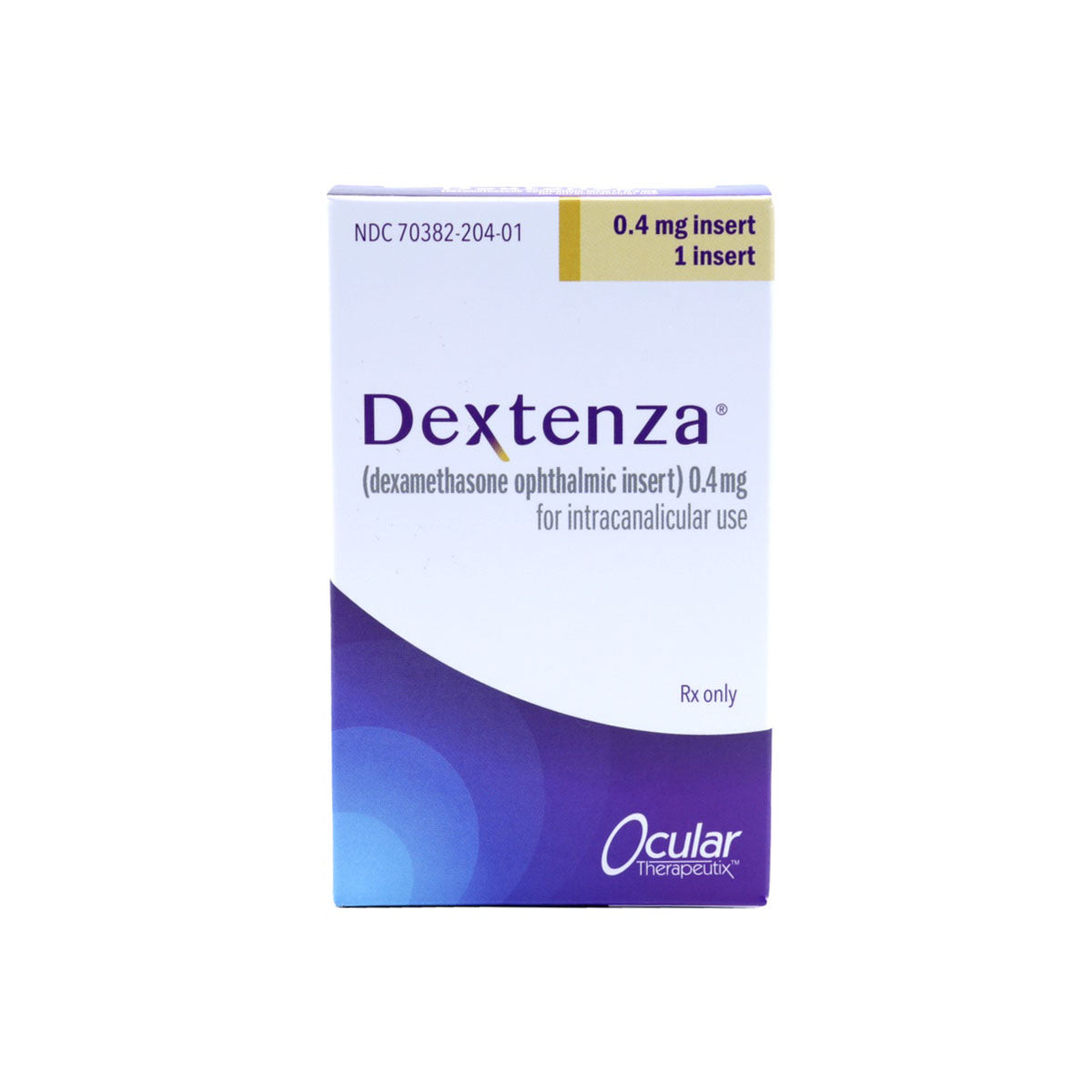
Dextenza (Dexamethasone Ophthalmic Insert), 0.4 mg, 1 Insert — Ocular Therapeutix
| Active ingredient |
Dexamethasone 0.4 mg |
| Dosage form |
Ophthalmic intracanalicular insert |
| Route |
Ophthalmic, intracanalicular (inserted into the lower lacrimal punctum/canaliculus) |
| Size |
1 insert per pouch |
| Manufacturer |
Ocular Therapeutix, Inc. |
Indications and Usage
DEXTENZA is a corticosteroid indicated for the treatment of ocular inflammation and pain following ophthalmic surgery in adults and pediatric patients, and for the treatment of ocular itching associated with allergic conjunctivitis in adults and pediatric patients aged 2 years and older. Use is not recommended for allergic conjunctivitis itching in pediatric patients who require sedation for the insertion procedure.
Dosage and Administration
DEXTENZA is inserted into the lower lacrimal punctum and canaliculus. A single insert releases a 0.4 mg dose of dexamethasone over up to 30 days. It is resorbable and does not require removal; saline irrigation or manual expression can remove it if necessary. Intended for single use only.
Warnings and Precautions
- Intraocular pressure increase — monitor IOP during treatment; prolonged corticosteroid use may lead to glaucoma with optic nerve damage and visual field defects
- Bacterial infection — steroids may suppress host response and mask or enhance existing infection
- Viral infection — may prolong or exacerbate ocular viral infections, including herpes simplex
- Fungal infection — consider fungal invasion in any persistent corneal ulceration where a steroid has been used
- Delayed healing — may delay healing and increase incidence of bleb formation after cataract surgery
- Other corticosteroid complications — initial prescription and renewal should be made only after slit lamp examination (and fluorescein staining where appropriate); re-evaluate if symptoms fail to improve after 2 days
Contraindications
Active corneal, conjunctival, or canalicular infections, including epithelial herpes simplex keratitis (dendritic keratitis), vaccinia, varicella, mycobacterial infections, fungal diseases of the eye, and dacryocystitis.
Adverse Reactions
Most common ocular reactions: anterior chamber inflammation including iritis/iridocyclitis (10%), intraocular pressure increased (6%), visual acuity reduced (2%), cystoid macular edema (1%), corneal edema (1%), eye pain (1%), conjunctival hyperemia (1%). Most common non-ocular reaction: headache (1%).
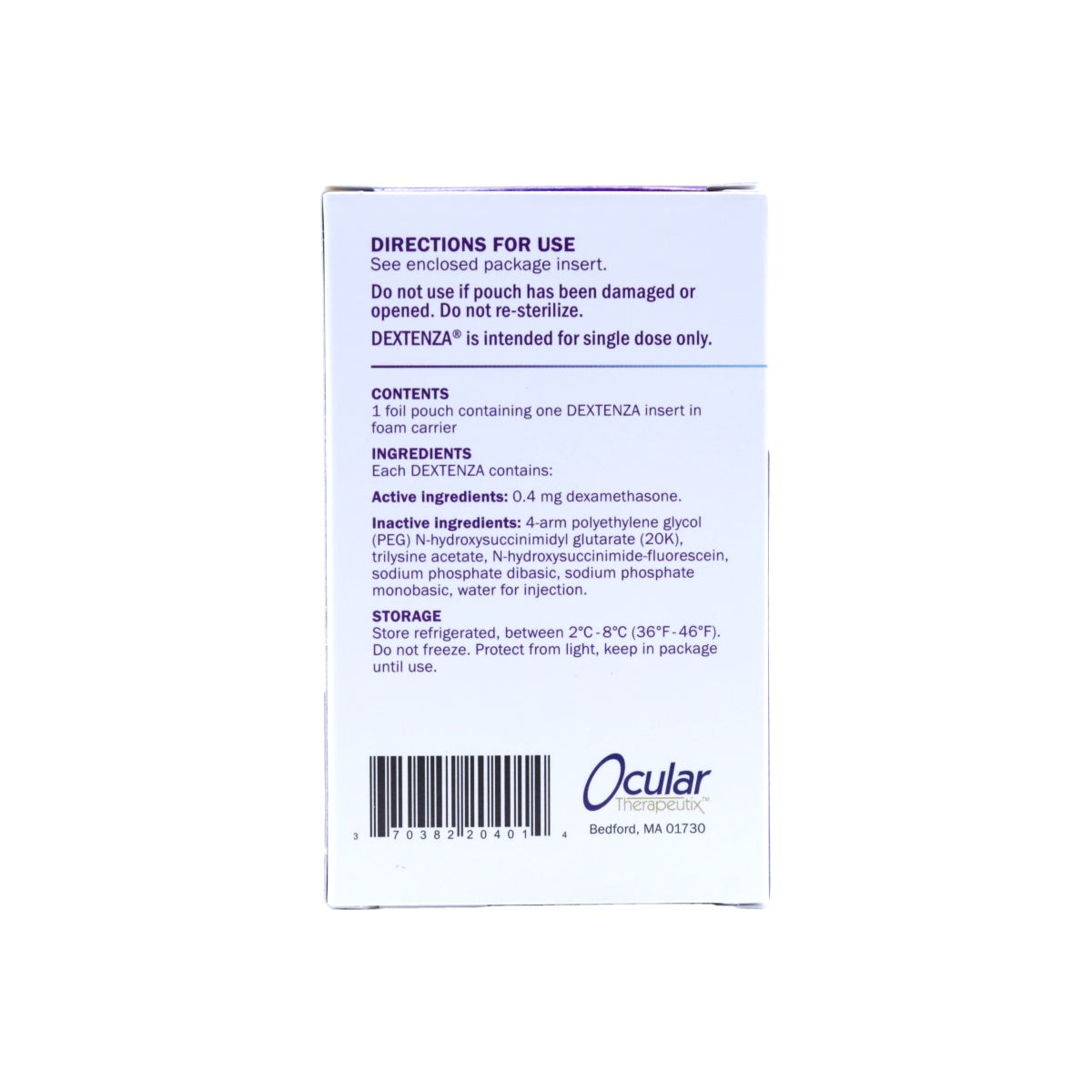
Storage and Handling
Store refrigerated between 2°C and 8°C (36°F–46°F). Do not freeze. Protect from light; keep in package until use.
How Supplied
Supplied sterile in a foam carrier within a foil laminate pouch. Available in cartons containing 1 pouch (1 insert) or 10 pouches (10 inserts).
Professional use only. Clinical information summarized from FDA-approved prescribing information (Structured Product Labeling); refer to the full prescribing information via DailyMed for complete details.
If you have any questions related to DSCSA compliance, transaction history, regulatory data or quality assurance, please contact our team at compliance@dryeyerescue.com for more information.




![Tobramycin Dexamethasone [TOBRADEX] 0.3%/0.1% 2.5mL](http://wholesale.dryeyerescue.com/cdn/shop/files/RX-1056-Tobramycin-Dexamethasone-01.jpg?v=1784151141&width=480)
